
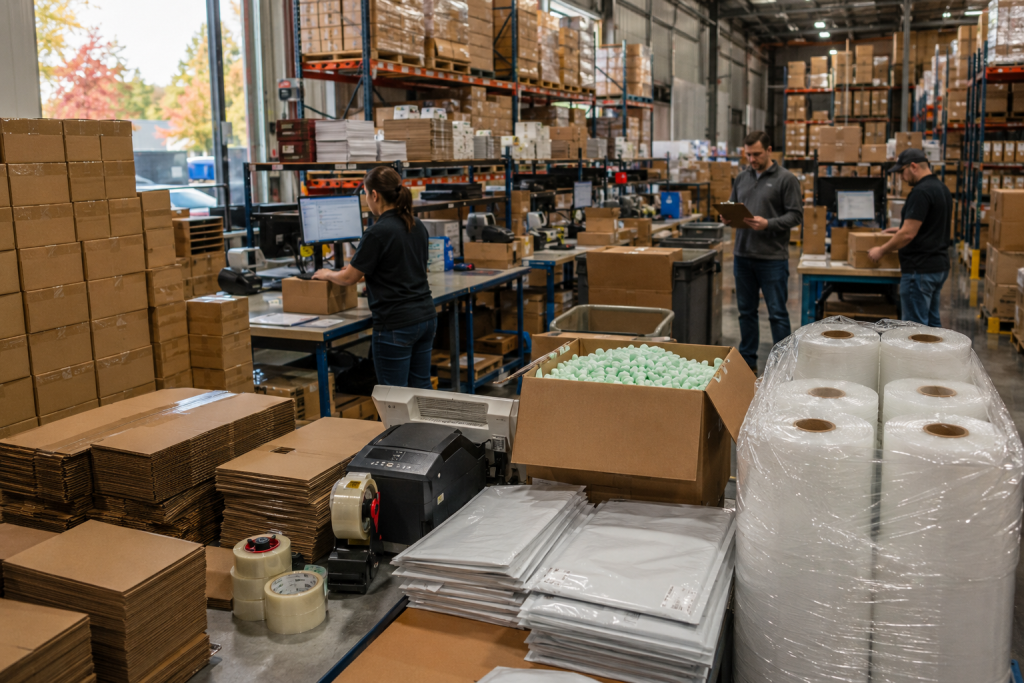
Every year, Q4 catches warehouses off guard. Not because the holiday shipping season is a surprise — it arrives at the same time every year — but because operations that are running smoothly in August tend to assume they will keep running smoothly in November. They usually do not.
October and November bring a surge in order volume that strains packaging inventory, taxes packing-station equipment, and reveals storage layout problems that did not matter when throughput was half of what it is during peak season. The teams that handle Q4 best are the ones that spent August and September getting ready.
This checklist is designed to help you do exactly that. Work through each category now, and you will enter the holiday shipping season with fewer surprises and more control.
Why August Is the Right Time to Start
It feels early. August is warm, summer orders are still moving, and Q4 feels far away. But there are several good reasons why August is the correct time to begin your readiness audit.
Lead times matter. Packaging supplies, equipment parts, and custom materials can have lead times of several weeks. If you wait until October to discover you are short on corrugated boxes or your stretch wrapper needs a new roll carriage, you may be waiting for product during your busiest weeks.
Suppliers get stretched too. Box manufacturers, stretch film producers, and tape suppliers all see elevated demand from Q3 into Q4 as operations across industries prepare for the same surge. Orders placed in August are more likely to arrive on time and at standard pricing than orders placed in October, when demand has already peaked.
Your team has capacity now. Training new seasonal staff, reorganizing storage layout, and upgrading equipment are all much easier to execute in a slower period than in the middle of a high-volume rush.
Packaging Supply Audit
Start with the supplies your packing stations consume every day. These are the items that run out first and cause the most disruption when they do.
Corrugated boxes. Audit your current box inventory by size. Review your order history from the previous Q4 to understand which sizes you ran through fastest and how much lead time you had on reorders. Identify your top 3 to 5 box sizes by volume and place advance orders to build a buffer.
Check your box quality at the same time. Corrugated that has been sitting in a warehouse through summer humidity may have absorbed moisture and lost compressive strength. Test a few boxes from older stock by pressing on the walls and examining the fluting. Soft, wavy corrugated will not protect the product in transit as well as fresh stock will.
Void fill and cushioning. Whether you use paper cushioning, air pillows, foam, or a combination, calculate your expected usage based on last year’s Q4 volume and build a buffer of at least 20 percent. Running out of void fill mid-November is an avoidable problem that costs you in damaged shipments and delayed orders.
Carton sealing tape. Tape is one of the most overlooked supply categories until someone reaches for a roll and the dispenser is empty. Review how many tape rolls your packing stations go through per week during peak volume, multiply by your expected Q4 weeks, and add a buffer. Check your tape dispensers at the same time. A dispenser with a worn blade or a bent hub slows packers down and creates frustration at high-volume moments.
Stretch wrap. For operations that ship on pallets, stretch film is a critical consumable. Review your machine film inventory if you run a stretch wrapper, and verify that your machine is operating correctly before you need it at full capacity. If you hand wrap, evaluate whether your current hand wrap gauge is appropriate for the heavier or more varied loads Q4 may bring.
Poly mailers and bubble mailers. For operations that ship soft goods or lightweight products in mailers, verify inventory levels across all sizes. Mailers are an easy item to run short on because they take up less physical space and are easy to underestimate.
Labels and label stock. If you print shipping labels in-house, check your label supply and verify that your printer ribbons, heads, and calibration are in good condition. A label printer that goes down during peak season creates a bottleneck that ripples through your entire operation.

Equipment Review
Packaging consumables get most of the attention in Q4 prep, but equipment failures often derail high-volume operations.
Stretch wrap machine. If you use a turntable or rotary arm wrapper, schedule a maintenance check before Q4. Inspect the film carriage, pre-stretch rollers, and turntable drive. Replace any worn components now. If your machine has been unreliable or is aging, evaluate whether a repair or upgrade is the better investment before your busiest season.
Tape dispensers and applicators. Walk your packing stations and test every dispenser. Replace worn blades and check tension settings. If you use a tape machine or automated carton sealer, run it through a cycle and verify it is sealing cleanly.
Packing tables and workstations. Check that all packing station surfaces are intact, the lighting is adequate, and ergonomic equipment, such as anti-fatigue mats, is in good condition. Packers who are uncomfortable or working at a cluttered station are slower and make more errors.
Material handling equipment. Pallet jacks, hand trucks, and carts that work fine at normal volume become bottlenecks when throughput doubles. Check wheels, hydraulics, and handle condition. Add to your equipment inventory if your peak volume warrants it.
Storage Layout Review
The way your warehouse is organized for summer operations may not be optimal for Q4. Take a critical look at your layout with peak volume in mind.
Identify which products or SKUs are likely to have the highest Q4 velocity, and ensure they are positioned closest to your packing stations. Moving fast-movers during Q4 costs time and labor. Moving them in August costs almost nothing.
Review your incoming receiving area. Q4 means more frequent inbound deliveries of both inventory and packaging supplies. Make sure there is adequate staging space to receive and process inbound shipments without creating a backlog at the dock.
Check your bulk storage for packaging supplies. Corrugated boxes, stretch film, and void fill occupy significant floor space. If you are planning to build a larger buffer than usual, identify where that additional inventory will go before it arrives.

Staff and Process Readiness
Even with the right supplies and well-maintained equipment, Q4 can strain operations that are not staffed and trained for higher volume.
If you plan to bring on seasonal workers, start that process in August. Onboarding and training take time, and packers with two weeks of experience before Q4 begins are significantly more productive than those starting on their first day in November.
Review your packing standards with your current team before the rush. Walk through correct box selection, cushioning techniques, tape application, and label placement. Small errors in packing quality that are manageable at normal volume become expensive problems at 3x throughput.
Establish clear communication protocols for supply shortfalls. Every person on the floor should know who to notify when a supply is running low, and that person should have a clear process for escalating reorders before a stockout occurs.
Frequently Asked Questions
When should I start Q4 warehouse prep? August is the ideal time to begin. It gives you enough runway to identify supply gaps, place advance orders with lead time to spare, address equipment issues, and reorganize your layout before peak volume arrives.
How much extra packaging supply should I order for Q4? Review your actual Q4 usage from the previous year and add a buffer of 20-25 percent for key consumables such as boxes, tape, void fill, and stretch film. It is better to carry a small surplus into January than to run short in November.
What equipment should I check before Q4? Priority items include your stretch wrap machine, tape dispensers and applicators, and material-handling equipment such as pallet jacks and hand trucks. Any equipment that is borderline should be repaired or replaced before peak volume begins.
How do I decide which products to move closer to packing stations? Pull your order data from the previous Q4 and identify the top-velocity SKUs. Those items should be positioned to minimize the pick path to your packing stations. If you do not have last year’s Q4 data, use your current velocity data and adjust for any known seasonal trends in your product mix.
What happens if I run out of packaging supplies during Q4? Running out of critical packaging supplies during peak season forces you to choose between delaying shipments and paying premium prices for emergency restocking. Neither is good. The best mitigation is to build adequate buffer inventory in advance and establish reorder triggers so supplies are reordered before they run out.
Stock up on corrugated boxes, stretch film, tape, void fill, and all the packaging supplies your operation needs for Q4 at nationalew.com — and get your warehouse ready before the rush arrives.