A shipping label is the one part of your package that has to work perfectly every time. If a carrier cannot scan it, the box gets delayed, misrouted, or returned, and a smudged or peeling label can undo an otherwise perfect shipment. Choosing the right shipping labels is less about brand and more about matching the print method, the material, and the adhesive to how your packages are made and where they travel.
This guide walks through how labels are printed, the main label types by job, and how to pick the right adhesive and size so every package scans the first time.
The short version: To choose the right shipping labels, match three things. Pick a print method (direct thermal for short-term shipping labels, thermal transfer for long-lasting barcodes, laser or inkjet for office printing). Pick a label type for the job, from shipping and handling labels to D.O.T. and inventory labels. Then match the adhesive and material to the surface and conditions, such as cold, outdoor, or curved packaging.
Why the Right Label Matters
Labels do more than show an address. They carry the barcodes carriers scan, the handling warnings that protect fragile freight, and the compliance markings that keep hazardous shipments legal. A label that smears, curls, or falls off creates real cost: missed scans, delayed deliveries, fines on regulated shipments, and packages that come back to you. Getting the label right is cheap insurance on everything else in the box.
How Labels Are Printed: Thermal vs. Laser
The print method is the first decision because it drives both your printer and your label cost.
Direct thermal
Direct thermal labels use heat-sensitive material and need no ink or ribbon. They are ideal for shipping labels and other short-term uses. The trade-off is that they fade with heat and sunlight over time, so they are not meant for long-term labeling.
Thermal transfer
Thermal transfer printing uses a heated ribbon to bond the image to the label, creating a durable, long-lasting mark. Choose this for barcodes, product labels, and anything that needs to stay readable for months or years. It requires thermal transfer labels and ribbons.
Laser and inkjet sheet labels
If you print from a standard office printer, laser labels on sheets are the simplest path. They suit lower volumes and addresses, and they do not require a dedicated label printer.
| Method | Durability | Best for |
|---|---|---|
| Direct thermal | Short-term, fades over time | Shipping labels and high-volume parcels |
| Thermal transfer | Long-lasting, scan-stable | Barcodes, product, and inventory labels |
| Laser / inkjet | Good, ink-dependent | Low-volume and office printing |
Label Types by Job
Once you know how you will print, choose the label built for the task.
| Label type | Use it for |
|---|---|
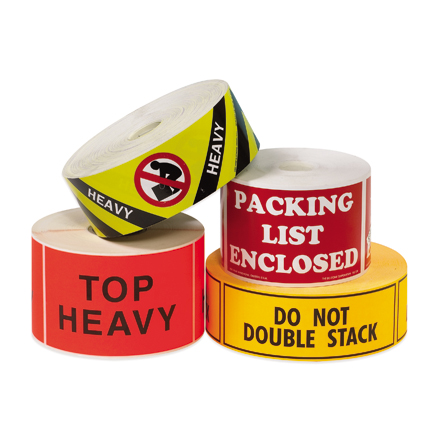
| Shipping & handling | Addresses, fragile and handling warnings |
| Thermal transfer | Durable barcodes and product labels |
| Inventory | Stock, bin, and asset tracking |
| D.O.T. | Hazardous material compliance markings |
| Rack labeling | Warehouse racking and location ID |
| Durable safety | Long-life warning and safety labels |
Adhesive and Material: Match the Surface and Conditions
The best print is useless if the label will not stay on. Permanent adhesives are the default for shipping and compliance, while removable adhesives suit temporary inventory or pricing. Match the material to the conditions too: cold and freezer environments need cold-temperature adhesives, outdoor and rugged uses call for durable, weather-resistant facestock, and curved or low-surface-energy packaging like some poly bags needs an adhesive rated to grip it. When in doubt, think about the coldest, wettest, or roughest moment the label will face and spec for that.
Common Label Sizes
The 4-inch by 6-inch label is the standard for thermal shipping labels and fits most carriers and label printers. Smaller formats handle address, content, and inventory marking, while sheet labels come in common office layouts. Standardizing on one or two sizes keeps your printers, software, and reorders simple. Pair your labels with packing list envelopes for documents and tags where a stick-on label will not work.
Matching Labels to the Job
Here is a quick framework for the most common situations.
If you print high volumes of shipping labels, use 4×6 direct thermal labels on a thermal printer.
If you need barcodes that stay readable for months, choose thermal transfer labels and ribbons.
If you ship hazardous materials, use compliant D.O.T. labels sized to the regulation.
If you label cold storage or outdoor items, spec a cold-temperature or durable weather-resistant label.
Frequently Asked Questions
What label should I use for shipping?
For most parcels, use a 4-inch by 6-inch direct thermal shipping label printed on a thermal printer. It needs no ink, scans cleanly, and suits high volumes. For low volumes, laser sheet labels from an office printer also work.
What is the difference between direct thermal and thermal transfer labels?
Direct thermal uses heat-sensitive material with no ribbon and is best for short-term shipping labels. Thermal transfer uses a heated ribbon for a durable, long-lasting print, which is better for barcodes and product labels.
Why do my barcodes fail to scan?
Common causes are faded direct thermal prints, smudging, low print contrast, or labels applied over a seam or curve. Use thermal transfer for durable barcodes, keep labels flat, and make sure the print is dark and sharp.
What size is a standard shipping label?
The standard shipping label is 4 inches by 6 inches, which fits most carriers and thermal label printers. Smaller sizes are used for address, content, and inventory labels.
What labels do I need for hazardous shipments?
Hazardous shipments require D.O.T. compliance labels that match the material and regulation. Use durable labels sized and marked to the rules so the shipment stays legal and clearly identified.
Which label adhesive works in cold or freezer storage?
Standard adhesives can release in the cold. Choose a cold-temperature or freezer-grade adhesive, apply to a clean, dry surface, and avoid labeling over frost or condensation.
The Bottom Line
Choosing the right shipping labels comes down to three decisions: print method, label type, and adhesive. Pick direct thermal, thermal transfer, or laser based on durability and volume, choose the label built for the job, and match the adhesive to the surface and conditions. Get those right and every package scans the first time, every time.
Why Order Your Labels From National Everything Wholesale
When a single unreadable label can delay a shipment or trigger a compliance issue, the labels you buy and who you buy them from both matter. National Everything Wholesale is your one-source wholesale partner for quality, consistency, and speed. We stock more than 20,000 packaging, shipping, and industrial supplies and ship same-day from five distribution centers across the country, so the labels your operation depends on are in stock and on their way when you need them. From thermal shipping labels to D.O.T. and durable safety labels, you get wholesale pricing, dependable quality, and a team that knows packaging.
Ready to order? Browse the full range of labels and place your order online, or call us at (833) 991-0993 and our team will help you find the right label for the job. Have questions first? Contact us here and we will get right back to you.