
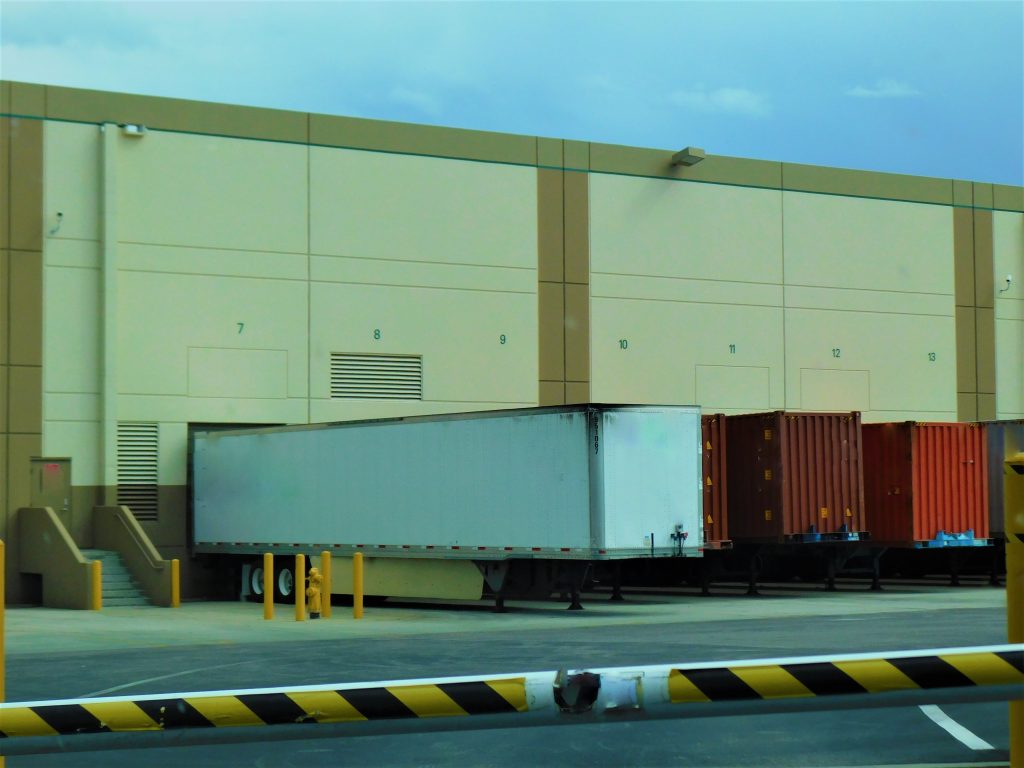
Most warehouse managers think about climate as a winter problem. Frozen dock doors, condensation on cold product, and stretch film that does not unwind properly in cold temperatures are familiar seasonal challenges. But summer brings its own set of inventory risks that are just as real and often less anticipated.
Heat and humidity affect product integrity, packaging performance, and adhesive reliability, resulting in damage claims, returned goods, and unhappy customers. The good news is that most summer-related inventory damage is preventable once you understand where the vulnerabilities are in your operation.
How Heat Affects Your Products
Temperature sensitivity varies widely across product categories, but the range of goods affected by summer heat is broader than most people assume.
Food and consumables are the obvious category. Products with low melting points, perishable ingredients, or temperature-sensitive formulations can degrade, melt, or spoil in uncontrolled trailers and warehouses. Even shelf-stable items like chocolate, candles, adhesives, and certain supplements can be compromised by sustained heat exposure.
Electronics and batteries are heat-sensitive in ways that are not always immediately visible. Prolonged heat exposure can degrade battery performance, warp components, and accelerate the degradation of adhesives used in product assembly. Products that spend time in hot trailers or on outdoor loading docks are at a higher risk than most operations account for.
Paper-based packaging and products absorb moisture from humid air, which can cause corrugated boxes to soften, warp, and lose compressive strength. A box that tests at a specific stacking strength in controlled conditions can lose a significant percentage of that strength when it absorbs moisture from a humid environment.
Adhesive-based products, including tapes, labels, and bonded packaging components, can lose adhesion in extreme heat. Labels that peel in transit, tape seals that release in a hot trailer, and packaging that separates at bonded seams are all failure modes that spike during summer months.
How Humidity Weakens Corrugated Packaging
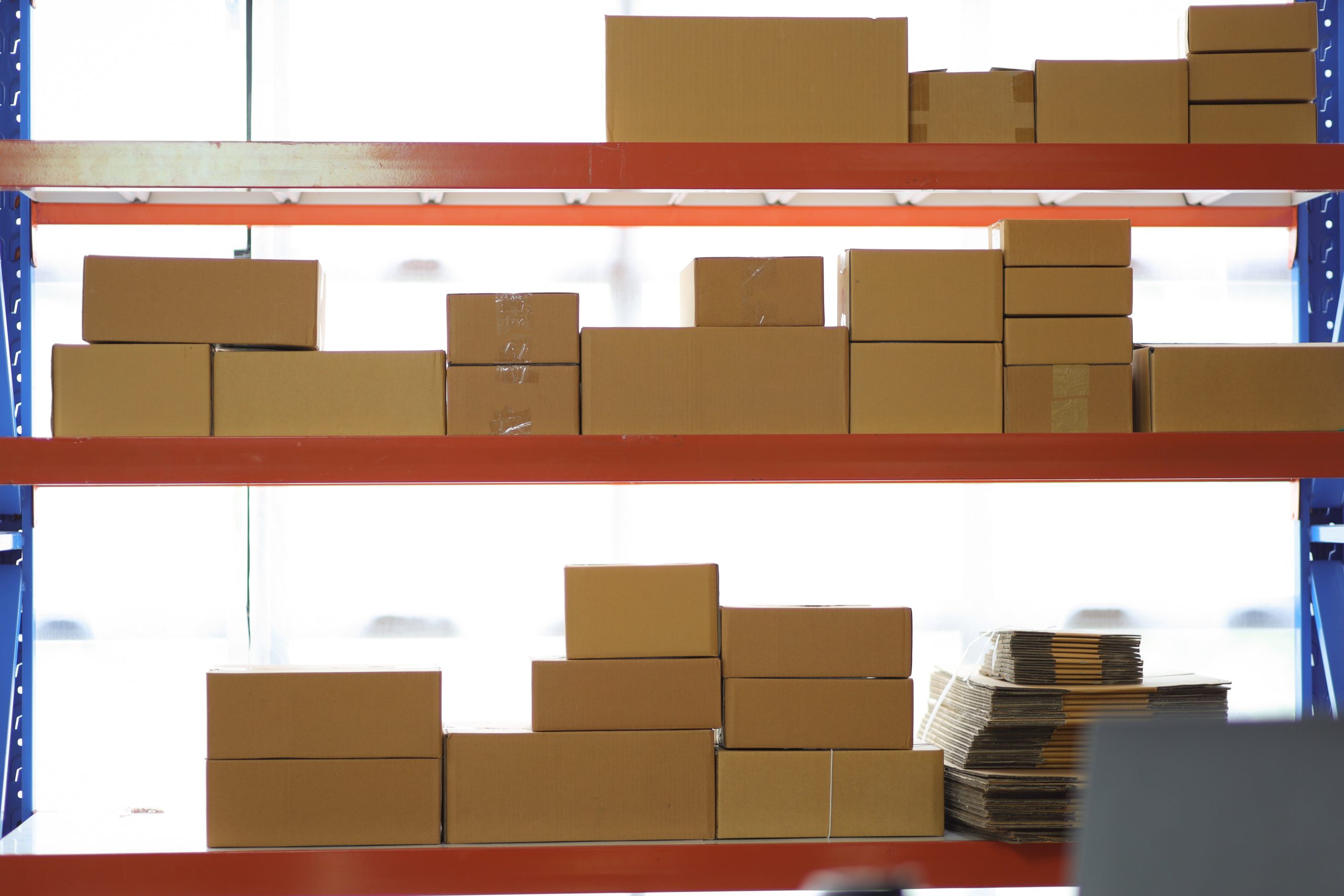
Corrugated cardboard is one of the most moisture-sensitive materials in a typical warehouse. The fibers in corrugated cardboard absorb ambient humidity, and as they do, the box’s structural integrity degrades.
The practical effect is significant. Corrugated boxes that stack perfectly in a climate-controlled facility may begin to bow, compress, or fail at the bottom of a stack when stored in a humid warehouse or shipped in a trailer with high moisture levels. A stack that holds up fine in spring can collapse in July under the same conditions.
A few strategies that help protect corrugated in humid environments include:
Store boxes off the floor. Moisture migrates upward from concrete floors, particularly in facilities without vapor barriers. Storing corrugated on pallets or shelving keeps them away from the most moisture-saturated zone in the building.
Maintain air circulation in storage areas. Stagnant humid air is worse than moving humid air. Fans and proper ventilation reduce localized humidity buildup in dense storage areas.
Use boxes promptly after they arrive. Boxes that sit in a receiving area, exposed to humidity for days or weeks before use, absorb more moisture than boxes used soon after receipt. First-in, first-out rotation of your box inventory reduces average exposure time.
Consider moisture-resistant corrugated for high-exposure applications. For products stored outdoors, shipped in refrigerated trailers where condensation is common, or otherwise at high risk of moisture exposure, moisture-resistant corrugated provides meaningfully better performance.
Protecting Pallet Loads From Summer Conditions
Pallet loads in transit face a different set of summer challenges than products in storage. Trailers parked in direct sun can reach internal temperatures significantly above ambient air temperature, and the shift from a cool loading dock to a hot trailer and back can create condensation on product surfaces as temperatures fluctuate.
A few best practices for pallet protection during summer shipping:
Stretch wrap more thoroughly. A well-wrapped pallet provides protection against moisture infiltration and load security. Ensure full coverage from the pallet deck to the top of the load with adequate film overlap between passes.
Time loading and unloading to avoid peak heat. When possible, schedule loading during cooler morning hours rather than midday. Products that sit on a dock or in a partially loaded trailer during peak afternoon heat experience greater thermal stress than products that are loaded and moved quickly.
Use pallet covers or top sheets for temperature-sensitive loads. Reflective pallet covers and stretch hood systems provide an additional thermal barrier for loads that cannot be climate-controlled during transit. For particularly sensitive loads, the cost of a cover is small relative to the cost of a damaged shipment.
Inspect stretch film performance in summer conditions. Some stretch film formulations perform differently at elevated temperatures. If your team is noticing more pallet load shifts or film failures during the summer months, evaluate whether your current film specification is appropriate for the temperature range your loads are experiencing.
Keeping Your Tape and Labels Working in the Heat
Two of the most common summer-specific packaging failures are tape that does not hold and labels that peel. Both trace back to adhesive performance at elevated temperatures, and both are addressable with the right product specifications.
For tape: Acrylic tape tends to perform better than hot-melt tape at high temperatures because the acrylic adhesive maintains its bond in heat more consistently than rubber-based hot-melt adhesives. If you are experiencing tape failures during the summer months and have been using hot-melt tape, switching to acrylic for summer operations is worth testing.
For labels: Choose label stock and adhesive combinations rated for the temperature range your products will experience. Labels designed for ambient environments may peel when products are stored in hot trailers or outdoor staging areas. Permanent adhesive labels rated for higher temperature ranges provide much better performance in summer conditions.
Common Misconceptions About Summer Inventory Risks
“Our warehouse has AC, so we are fine.” Climate-controlled storage is excellent protection for what is inside the building. But product damage often happens in transit, on loading docks, in outdoor staging areas, and in trailers that are not temperature-controlled. Even with a climate-controlled warehouse, risks from summer heat persist throughout the supply chain.
“If the product looks fine, it is fine.” Many forms of heat and humidity damage are not immediately visible. Corrugated that has absorbed moisture looks normal, but has reduced stacking strength. Adhesives that have been heat-stressed may hold initially and fail under the stress of handling and stacking. Visual inspection alone is not sufficient to catch all summer-related damage before it becomes a customer problem.
“Summer is not as hard on packaging as winter.” Both seasons present real risks. Winter challenges tend to be more visible. Summer challenges tend to be more gradual and show up in patterns over weeks and months rather than in obvious single-event failures.
Frequently Asked Questions
What temperature is too hot for a warehouse without climate control?
There is no single threshold, as different products have different temperature tolerances. As a general rule, sustained temperatures between 85 and 90 degrees Fahrenheit in storage areas begin to stress most adhesive-based packaging components, accelerate the degradation of heat-sensitive products, and, when combined with humidity, significantly reduce corrugated stacking strength.
How do I know if my corrugated boxes have absorbed too much moisture?
Boxes that feel soft, bend more easily than normal, or show visible warping at the corners have likely absorbed significant moisture. For stacked storage, check the bottom boxes first, as they experience the greatest compressive load and the most moisture exposure from the floor.
Does stretch film protect products from heat?
Stretch film provides limited thermal protection on its own. Its primary benefit in hot conditions is maintaining load integrity, preventing heat-softened adhesives and weakened corrugated from causing load collapse. For meaningful thermal protection, reflective pallet covers or insulated shipping solutions are more effective.
Should I change my tape specification for summer?
If you are experiencing tape failures during the summer months, evaluating your adhesive type is a good starting point. Acrylic tape generally outperforms hot melt tape at elevated temperatures. Also, confirm that the tape is being applied to clean, dry surfaces, as heat increases the likelihood of surface contamination affecting adhesion.
Where can I find packaging supplies suited for summer conditions?
National Everything Wholesale carries a full range of corrugated boxes, stretch film, tape, and pallet protection products at wholesale pricing to help operations stay protected through summer shipping and storage conditions.

Stay Ahead of the Season
Summer is predictable. The heat and humidity arrive at the same time every year, and so do the inventory and packaging problems that come with them. Operations that adjust their materials and practices ahead of the season avoid the reactive scramble that comes with damaged shipments, failed seals, and softened boxes.
Browse the full range of warehouse and packaging supplies at nationalew.com and make sure your operation is ready before summer arrives.