
Summer changes everything about how a facility runs. More people coming through the door, more outdoor debris tracked inside, more heat accelerating the spread of odors and bacteria, and more demand on the supplies that keep your space clean and safe.
For facility managers and business owners, the summer season is not the time to scramble for restock. A little planning in late spring pays off all the way through Labor Day. This guide walks through the key supply categories to audit and stock up on before summer gets underway.
Why Summer Is a High-Demand Season for Facility Supplies
Most people think of fall and winter as the heavy seasons for janitorial supplies. But summer creates its own unique pressure on facility maintenance.
Foot traffic increases significantly for retail locations, restaurants, distribution centers, schools hosting summer programs, and any business that sees seasonal activity. More traffic means faster consumption of paper products, hand soap, trash liners, and floor care supplies.
Heat and humidity speed up the growth of bacteria, mold, and mildew in restrooms, break rooms, and storage areas. Facilities that are adequately stocked in March can find themselves short in June simply because the pace of consumption changes with the weather.
Outdoor activity also brings in more dirt, pollen, moisture, and debris. Entry mats take a beating. Hard floors collect more tracked-in grime. Restrooms see heavier use during outdoor events and extended hours.
Getting ahead of these realities starts with a supply audit.
Start With a Supply Audit
Before placing orders, walk through your facility with a notepad or tablet and take stock of what you have on hand, what is running low, and what is likely to run out faster in the coming months.
Focus on the areas most affected by increased summer traffic: entryways, restrooms, break rooms, loading docks, and any outdoor-adjacent spaces. Note when a case or container is approaching the end, and flag anything you typically run short of during busy periods.
From that audit, build a restocking priority list organized by category. Here are the key areas to cover.
Paper Products and Dispensables
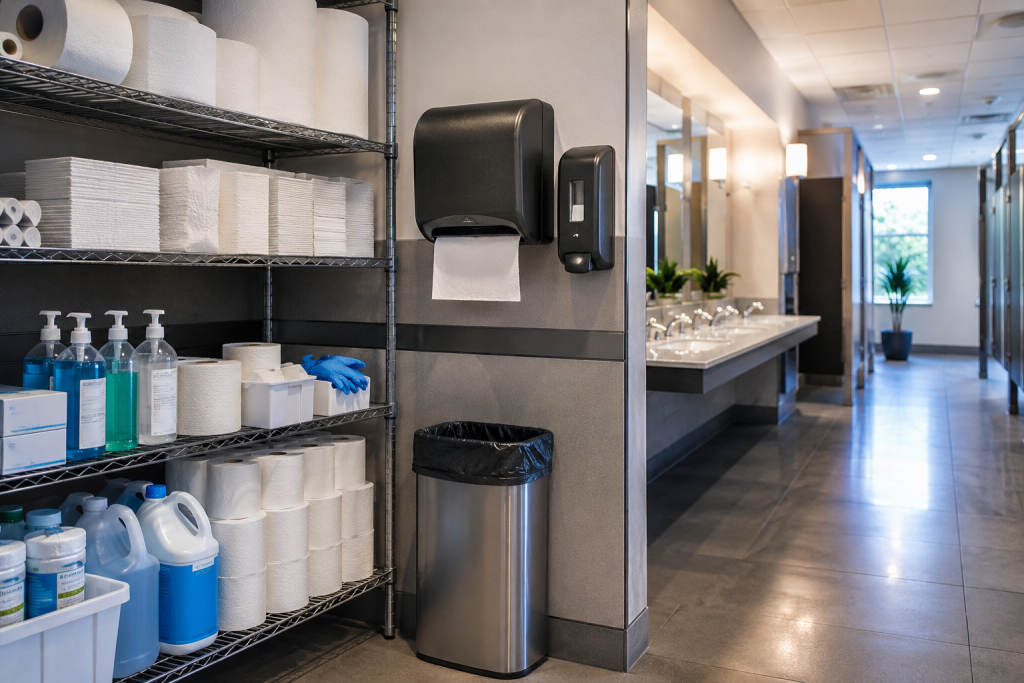
Paper towels, toilet tissue, and hand soap are the consumables that disappear fastest when traffic increases. If your facility runs single-ply tissue or lower-capacity dispensers during slower months, summer may be the time to consider upgrading to higher-capacity rolls or bulk-pack options that require fewer changeovers.
Check your soap dispensers at the same time. Refillable foam soap systems are a cost-effective option for high-traffic restrooms, and the concentrated refills reduce the frequency of staff rounds.
Facial tissue, seat covers, and disposable gloves are also worth reviewing if your facility uses them regularly.
Floor Care Supplies
Floors take the most visible abuse during the summer months. Tracked-in dirt, moisture from rain and irrigation, and increased foot traffic all show up in your entryways and main corridors first.
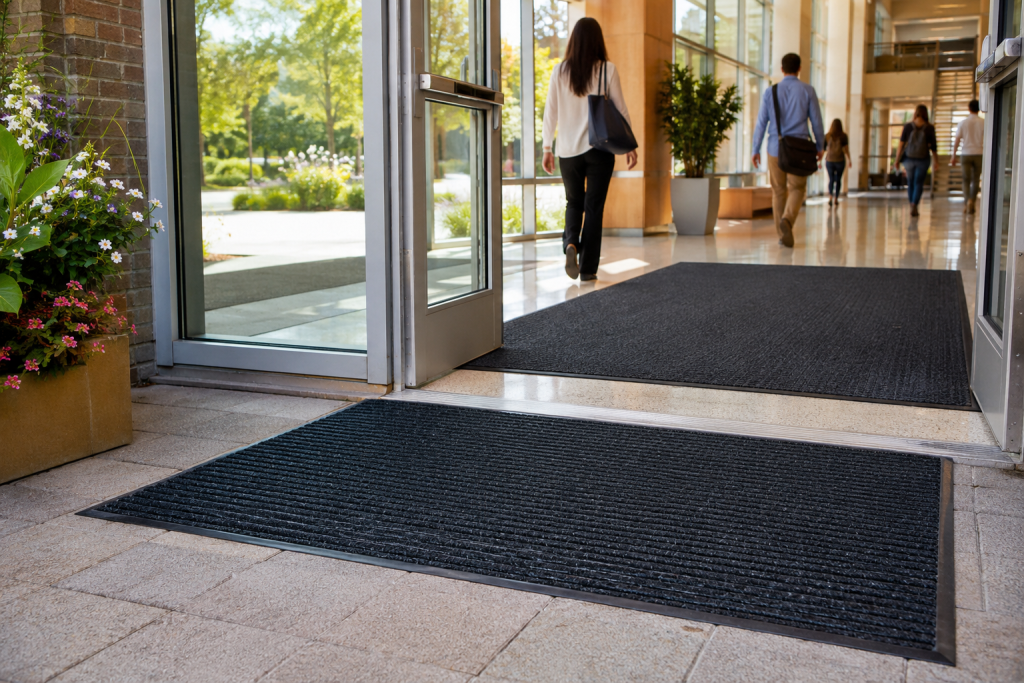
Entry mats are your first line of defense. Scraper mats at exterior doors capture heavy debris, while absorbent mats inside the entry zone pull moisture off shoes before it reaches your main floors. If your current mats are worn flat or no longer absorbing effectively, summer is the right time to replace them.
For hard floor maintenance, make sure your mop buckets and wringer systems are in good working order. A bucket with a cracked wringer or a worn gasket wastes time and leaves the floor wetter than it should be. Stock extra mop heads so high-use areas can be changed out frequently without waiting for laundry cycles.
Microfiber flat mops are worth stocking in larger quantities for facilities that clean daily. They pick up more debris per pass than traditional loop mops and dry faster, which matters during summer humidity.
For the floor finish and stripper, review your usage from last summer and order accordingly. High-traffic areas often need additional coat applications mid-season to maintain appearance and protection.
Restroom and Sanitation Supplies
Restrooms are the area where summer supply shortages show up fastest and cause the most complaints. Heat amplifies odors, bacteria multiply more quickly, and higher foot traffic requires more frequent cleaning to keep up.
Disinfectant cleaners, bowl cleaners, and restroom deodorizers should all be stocked with more cushion than you carry in slower months. If your facility uses aerosol air fresheners or passive odor control systems, check fill levels and reorder before they run dry.
Trash liners for restroom receptacles are another fast-mover. Higher usage means emptying more frequently, which burns through liners faster than you may be used to.
Gloves and surface wipes for restroom cleaning staff should also be reviewed. These are items that are used consistently and tend to be overlooked until someone reaches for a pair and finds the box empty.
Trash and Waste Station Supplies
Outdoor and semi-outdoor trash receptacles fill up faster during the summer months, especially near entrances, break areas, and loading zones, where activity is higher. Make sure you have the right liner sizes on hand for all of your receptacle types, not just the interior ones.
Kitchener-grade liners with higher puncture resistance are worth stocking for heavy-use locations. A liner failure during a busy shift creates more of a cleanup problem than a stocking problem.
If your facility handles food service or break room waste, odor-control liners are a worthwhile upgrade for summer. They help manage the smell that builds faster in warm temperatures.
Hand Hygiene and Personal Care Products
Summer brings more outdoor activity, more handwashing, and more use of hand sanitizer at entry points and shared surfaces. If your facility has wall-mounted or freestanding sanitizer dispensers, this is the time to audit refill levels and stock extra.
Foam sanitizer is typically the most economical option for high-volume dispensers. Gel sanitizer works well for personal dispensers and point-of-sale locations.
Consider whether your current dispenser placement makes sense for summer traffic patterns. An entry point that sees light use in January may be a primary throughway in July, and having a sanitizer station there reduces the spread of contaminants before people reach shared surfaces inside.
Putting It All Together
A summer supply plan does not need to be complicated. The goal is simply to have more of what you use most, and to have it on hand before demand spikes rather than after.
Run your audit, build your restock list by category, and place orders with enough lead time to receive product before your busy season starts. For most facilities, placing summer orders in May gives enough buffer to account for shipping timelines and any out-of-stock situations on specific products.
National Everything Wholesale carries a full range of janitorial and facility supply products for commercial accounts. Visit nationalew.com to browse by category or reach out to place a seasonal order for your facility.
Frequently Asked Questions
How far in advance should I restock for summer? For most facilities, placing summer supply orders 4 to 6 weeks before your busy season begins provides enough lead time to receive product and identify any backorders before they affect operations.
Which supplies run out fastest in summer? Paper products, hand soap, restroom liners, and floor care consumables like mop heads tend to see the greatest increases in consumption during the summer months. These should be your first priority when building a restocking order.
Should I change my cleaning schedule in summer? In most cases, yes. Higher foot traffic and warmer temperatures mean restrooms, entryways, and shared surfaces need more frequent attention. Reviewing your cleaning schedule at the start of summer helps ensure that your staff and supply levels align with actual demand.
What is the best floor mat for a summer entryway? A combination system works best: a scraper mat at the exterior threshold to remove heavy debris and an absorbent mat just inside the door to pull moisture from shoes. Replace worn mats before summer, since a flat or saturated mat provides little protection for your floors.
How do I prevent restroom odor in summer? More frequent cleaning is the most effective solution. Odor control products like bowl deodorizers, passive air fresheners, and odor-control liners help in between cleanings, but they work best as a supplement to a consistent cleaning schedule rather than a substitute for one.