

Picking a corrugated box sounds simple until you are staring at a supplier list full of terms like ECT, burst strength, C-flute, and double wall. Choose wrong and you pay for it three ways: crushed product, returns and refunds, or boxes so overbuilt that you waste money on every single order. The good news is that choosing the right corrugated box comes down to three decisions, and once you understand them you can spec a box with confidence.
This guide walks through all three: getting the size right, matching the strength rating to your product, and picking the correct flute. By the end you will know exactly what to ask for when you order.
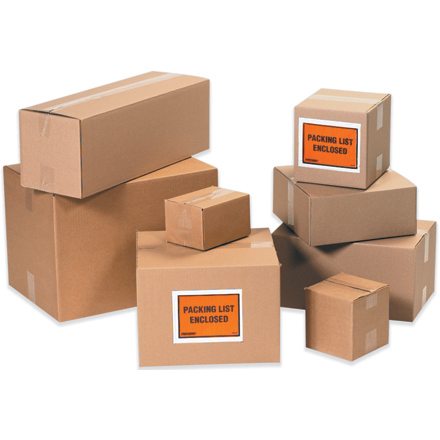
The short version: To choose the right corrugated box, match three things to your product. Get the size right by measuring inside dimensions plus room for cushioning. Match the strength (ECT or burst rating) to how heavy your product is and whether boxes get stacked. Pick a flute type based on whether you need cushioning, stacking strength, or a smooth surface for printing. Heavier or stackable loads usually call for a higher ECT rating or double-wall construction.
What Is a Corrugated Box? (And Why It Is Not Cardboard)
People call almost everything “cardboard,” but in packaging the distinction matters. Cardboard is a flat, single-layer paper stock, the kind used for cereal boxes and shoe boxes. That material is technically chipboard, and if that is what you need, look at chipboard cartons instead.
A corrugated box is different. It is built from three layers: a wavy inner layer called the flute, sandwiched between two flat sheets called liners. That wavy middle layer is what gives corrugated its strength and cushioning. It is why a corrugated box can survive a drop, a stack, and a cross-country truck ride when plain cardboard would collapse.
When you understand that the flute does the heavy lifting, the rest of the buying decision starts to make sense.
Corrugated Box Sizes: How to Measure and Choose
Box dimensions are always written as length by width by depth, and they always refer to the inside of the box. This trips up a lot of first-time buyers who measure the outside and end up with a box that does not fit their product.
How to read box dimensions
Length is the longer side of the opening. Width is the shorter side of the opening. Depth is the distance from the opening down to the bottom. So a box listed as 12 x 9 x 6 has a 12-inch by 9-inch opening and is 6 inches deep, measured inside.
How to measure your product
Measure your product at its longest, widest, and tallest points. Then add room for protection. A snug box with no cushioning room leads to damage, while a box that is too big wastes void fill and can increase your dimensional weight charges. A common starting point is to leave roughly 2 inches on each dimension for cushioning on fragile items, less for durable goods.
When multi-depth boxes earn their keep
If you ship products of varying heights, multi-depth boxes are worth a look. They are scored at several heights so you can fold them down to the size you need. That means one box handles several products, which cuts the number of sizes you have to stock and helps you avoid shipping half-empty cartons. Fewer SKUs and less wasted space is a real cost saver for growing operations.
Box Strength Explained: ECT vs. Burst
This is the part most buyers find confusing, so here is the plain-English version. There are two common ways to rate corrugated strength, and they measure two different things.
Edge Crush Test (ECT)
ECT measures stacking strength, or how much weight a box can bear when pressure is applied to its edges, like when boxes are stacked on a pallet. It is expressed as a number such as 32 ECT or 44 ECT. The higher the number, the more stacking force the box can take. If your boxes get palletized and stacked in a warehouse, ECT is usually the number you care about.
Burst Strength (Mullen Test)
Burst strength, also called the Mullen test, measures how much pressure the board can take before it punctures or bursts. It is expressed in pounds, such as 200# or 275#. This rating matters most for heavy, dense, or sharp-edged contents that could push through the wall of the box.
Which one should you spec?
Here is a simple way to decide.
| Factor | ECT (Edge Crush Test) | Burst / Mullen Test |
|---|---|---|
| What it measures | Stacking strength | Puncture and burst resistance |
| Best for | Palletized, stacked loads | Heavy, dense, or sharp contents |
| Common ratings | 32, 44, 48 ECT | 200#, 275#, 350# |
| Material weight | Often a lighter board | Usually a heavier board |
For most general shipping where boxes get stacked, a 32 ECT single-wall box is a reliable default. Step up to 44 ECT or double wall when product gets heavier or stacks higher.
Flute Types: A, B, C, E, and F Flute
Remember the wavy middle layer? That is the flute, and its size changes how the box performs. Bigger flutes cushion better and stack stronger. Smaller flutes give you a smoother surface for printing and a thinner, more compact box.
| Flute | Thickness | Cushioning | Best uses |
|---|---|---|---|
| A | Thickest (about 3/16″) | Highest | Fragile items needing maximum protection |
| B | About 1/8″ | Moderate | Canned goods, retail packaging, die-cut boxes |
| C | About 5/32″ | Good | General shipping boxes, the most common choice |
| E | About 1/16″ | Low | Printed retail and mailer boxes |
| F | Thinnest | Lowest | Small retail and premium e-commerce packaging |
If you are not sure where to start, C-flute is the workhorse of shipping boxes and handles the majority of general freight and parcel needs. Reach for E-flute or F-flute when the box itself is part of the customer experience and you want crisp printing, like a branded e-commerce mailer.
Single Wall vs. Double Wall vs. Triple Wall
Walls refer to how many layers of flute the box has.
Single wall is one flute layer between two liners. It covers most everyday shipping, from parcels to retail goods, and it is what most businesses use day to day.
Double wall adds a second flute layer for more strength and protection. It is the right call for heavier products, items that need extra stacking strength, or shipments that get rough handling. As a rough guide, many operations move to double wall once contents push past 60 to 80 pounds, though product fragility and stacking matter too.
Triple wall is the heavy hitter, built for industrial parts, large equipment, and loads that would crush a normal box. Unless you are shipping something genuinely heavy or oversized, you will rarely need it.
The trade-off is straightforward. More walls mean more protection and more cost. Spec up when the product demands it, not by default.
Matching the Box to the Job
Here is a quick decision framework for the situations that come up most often.
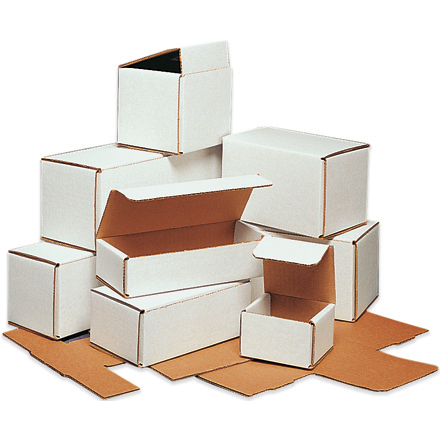
If you ship light e-commerce goods, a 32 ECT single-wall C-flute box is usually all you need. For branded unboxing, consider an E-flute mailer or look at corrugated mailer boxes.
If you ship heavy or dense products, move to a higher ECT rating or double-wall construction so the box does not fail under its own weight.
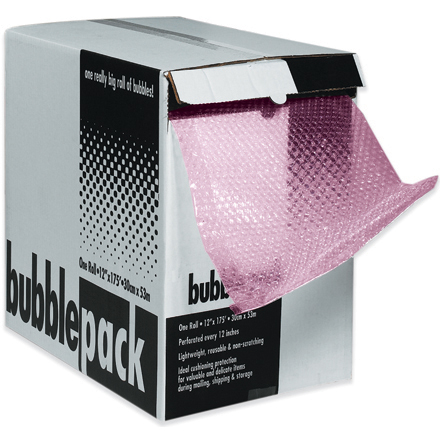
If you ship fragile items, prioritize cushioning. Choose a thicker flute and pair the box with the right protection from bubble, foam, and cushioning.
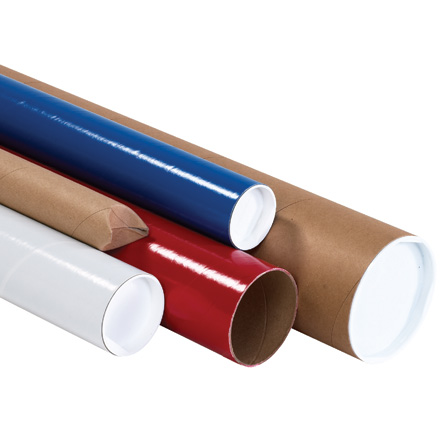
If you ship long or narrow items like posters or blueprints, a box is often the wrong tool. Look at mailing tubes instead.
If you store inventory in humid or temperature-swing conditions, know that moisture weakens corrugated over time. Keep boxes off concrete floors and away from damp walls, and factor that into the strength you choose.
How Much Box Do You Actually Need?
Once you know the size, strength, and flute that fit your product, the next question is how to buy smart. Standardizing on a small set of box sizes makes ordering, storing, and packing far simpler than carrying dozens of one-off sizes. Most operations find that three to five well-chosen sizes cover the large majority of what they ship.
Buying corrugated in bulk also protects you from the stockouts that stall a shipping operation. National Everything Wholesale carries more than 20,000 packaging, shipping, and industrial supplies and ships same-day from five distribution centers, so you can standardize your sizes and keep them in stock without tying up a warehouse full of inventory. When you are ready to order, browse the full corrugated box selection.
Frequently Asked Questions
What is the difference between corrugated and cardboard?
Cardboard is a flat, single-layer paper stock used for products like cereal boxes. Corrugated has three layers, including a wavy flute in the middle that adds strength and cushioning. Shipping boxes are corrugated, not cardboard.
What does ECT mean on a box?
ECT stands for Edge Crush Test. It measures how much stacking pressure a box can take on its edges before crushing. A higher ECT number, like 44 versus 32, means the box can support more weight when stacked.
How much weight can a corrugated box hold?
It depends on the strength rating and wall type. A standard 32 ECT single-wall box handles light to medium loads, while double-wall boxes carry heavier products. Always check the box specification against your product weight and how high boxes will be stacked.
What flute type is best for shipping?
C-flute is the most common choice for general shipping because it balances cushioning, stacking strength, and cost. Use A-flute for extra-fragile items and E-flute or F-flute when you want a smooth surface for printing.
When do I need a double-wall box?
Choose double wall when your product is heavy, dense, gets stacked high, or faces rough handling. Many operations switch to double wall once contents pass roughly 60 to 80 pounds, but fragility and stacking height matter as much as weight.
Do I measure a box by the inside or outside?
Box dimensions always refer to the inside, written as length by width by depth. Measure your product, add room for cushioning, and match that to the inside dimensions of the box.
The Bottom Line
Choosing the right corrugated box really does come down to three decisions: size, strength, and flute. Measure your product and add room for protection to get the size. Match the ECT or burst rating to your product weight and stacking. Pick a flute that fits the job, with C-flute as a safe default for general shipping. Get those three right and you protect your product, control your costs, and stop guessing every time you reorder.
Why Order Your Corrugated Boxes From National Everything Wholesale
When packaging is the only thing standing between your product and a damage claim, who you buy from matters as much as what you buy. National Everything Wholesale is your one-source wholesale partner for quality, consistency, and speed. We stock more than 20,000 packaging, shipping, and industrial supplies and ship same-day from five distribution centers across the country, so the boxes you depend on are in stock and on their way when you need them. Whether you are standardizing on a handful of core sizes or sourcing a heavy-duty box for an oversized load, you get wholesale pricing, dependable quality, and a team that knows packaging inside and out.
Ready to order? Browse the full range of corrugated boxes and place your order online, or call us at (833) 991-0993 and our team will help you find the right box for the job. Have questions first? Contact us here and we will get right back to you.