
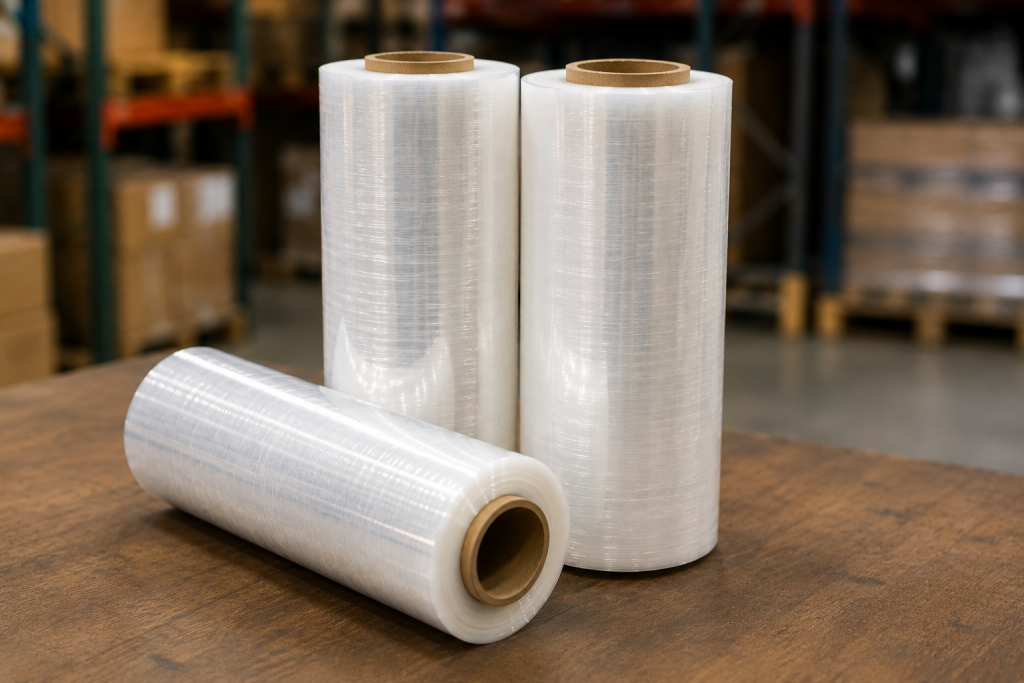
Stretch wrap is one of those products that most operations buy on autopilot. Someone ordered it once, it worked well enough, and it has been the same SKU on the reorder list ever since. The problem is that using the wrong stretch film for your application costs more than you think, either in product waste, load failures, or both.
This guide covers everything you need to know to choose the right stretch wrap for your operation, from film type and gauge to hand versus machine application and when it makes sense to upgrade.
What Stretch Wrap Actually Does
Before diving into product selection, it helps to understand what stretch wrap is designed to accomplish. Stretch film holds pallet loads together during transit and storage by applying consistent tension around the load. It protects products from dust, moisture, and shifting, and it signals tampering when the wrap is broken or cut.
The keyword is tension. Stretch wrap works because the film is stretched during application, which creates a cling force that holds the load together. A film that does not stretch properly, or that stretches so much it tears, fails at its basic job.
Getting the right product for your load type and application method is what makes stretch wrap effective, not expensive.
Hand Stretch Wrap vs. Machine Stretch Wrap
The most fundamental choice in stretch film selection is whether you are applying it by hand or with a machine.
Hand Stretch Wrap
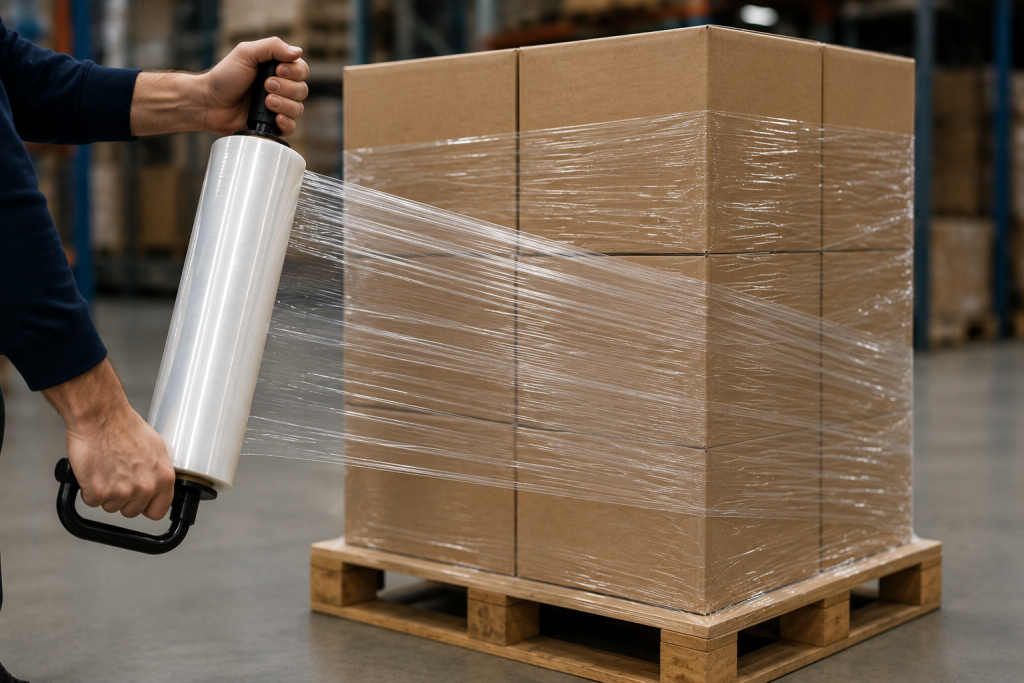
Hand stretch wrap is applied manually, either directly off the roll or with a handheld dispenser. It is the right choice for operations that handle a relatively small number of pallets per shift, have irregular or odd-shaped loads that require manual judgment, or cannot justify the investment in a stretch-wrap machine.
Hand wrap rolls are typically narrower (18 inches wide) and lighter (3 to 9 pounds), so they can be carried and dispensed by hand without fatigue. The gauge for hand wrap typically ranges from 37 to 80 gauge, depending on the load weight and stability requirements.
One important note: hand wrapping is physically demanding and difficult to apply consistently. A worker who is tired at the end of a shift wraps differently than one who is fresh at the start. That inconsistency leads to variable load security, which matters when your product is on a truck, hitting bumps for 500 miles.
Machine Stretch Wrap
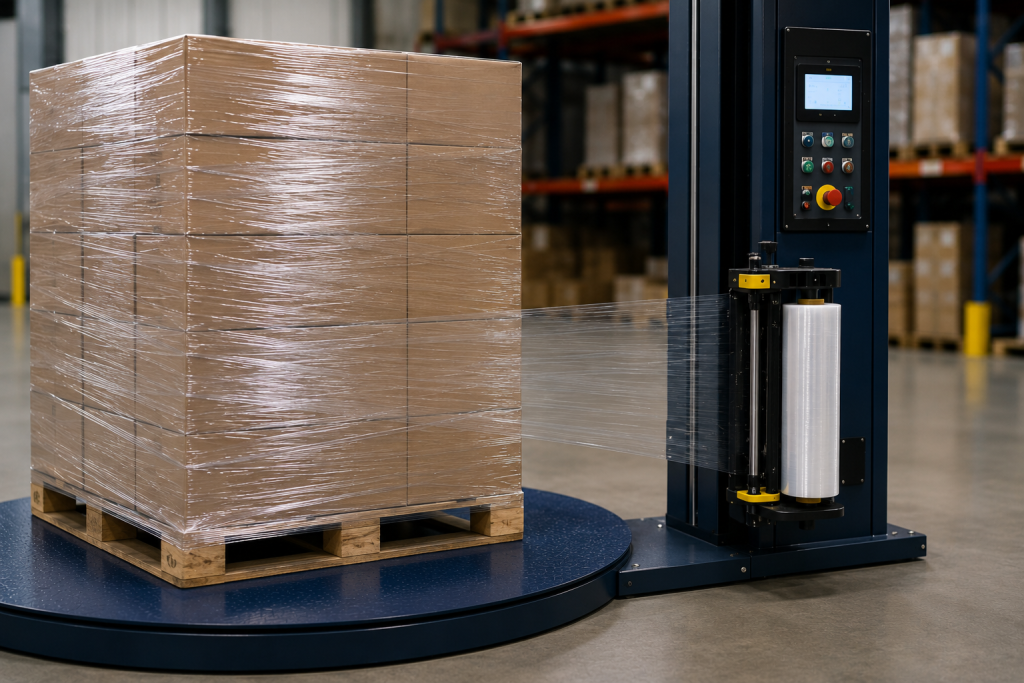
Machine stretch wrap is designed for use with a turntable or rotary arm stretch wrapper. The rolls are wider (typically 20 inches), heavier (often 30 to 40 pounds), and applied at a consistent tension level every time, regardless of who is running the machine.
Machine film is engineered to be pre-stretched before it leaves the machine, which means you use significantly less film per pallet than with hand wrapping. A machine applying pre-stretch film at 200 to 300 percent elongation uses a fraction of the material that hand wrapping requires to achieve the same or better load containment.
If your operation wraps 15 or more pallets per day, a stretch wrap machine combined with the right machine film almost always delivers meaningful cost savings over hand wrapping and produces more consistent results.
Cast vs. Blown Stretch Film
Within both hand and machine categories, stretch film is manufactured using one of two processes: cast or blown. The process significantly affects the film’s performance characteristics.
Cast Stretch Film
Cast film is produced by extruding molten resin through a flat die onto a chilled roller. The rapid cooling creates a film that is clear, quiet to unwind, and consistent in thickness. Cast film has a good cling on one side and low cling on the other, which helps prevent wrapped pallets from sticking together in storage.
Cast stretch film is the most common choice for general-purpose pallet wrapping. It works well for stable, uniform loads with moderate weight, is easy to apply by hand or machine, and is typically less expensive than blown film.
Blown Stretch Film
Blown film is produced by extruding resin upward through a circular die and inflating it into a bubble, then collapsing and rolling it. The slower cooling process produces a film with higher memory, more tear resistance, and greater puncture resistance than cast film.
Blown film is the better choice for heavy, irregular, or sharp-edged loads that would puncture or tear cast film. It is also stronger when loads shift in transit, as the higher memory helps the film recover and maintain tension rather than staying deformed.
Blown film is typically more expensive and noisier to unwind than cast film, and it has less clarity. For most standard warehouse applications, cast film is adequate and more economical. For demanding loads, blown film is worth the premium.
Understanding Gauge and Thickness
Stretch film gauge refers to the thickness of the film, measured in gauge (imperial) or microns (metric). Higher gauge generally means thicker film with greater puncture resistance, though the relationship is not perfectly linear because film composition also affects performance.
Common hand wrap gauges range from 37 gauge (lightweight, suitable for light or stable loads) to 80 gauge (heavy-duty, suitable for heavier or more irregular loads). A 60-gauge hand wrap covers most general warehouse applications.
For machine film, gauge ratings work similarly, but your machine’s pre-stretch capability is equally important. Stretching film to 200 percent effectively gives you the load containment of a thicker film while using much less material per pallet.
A common mistake is buying heavier-gauge film, thinking it will solve load containment problems. Often, the issue is not film thickness but application technique or a mismatch between the film type and the load. If your loads are failing, it is worth evaluating your wrapping pattern and tension before simply upgrading the gauge.
How to Choose the Right Stretch Wrap for Your Operation
Working through these four questions will point you to the right product:
How many pallets are you wrapping per day? For under 15 pallets per day, hand wrapping is probably the right fit. Over 15, evaluate the case for a stretch wrapper and machine film.
What does your load look like? Light, stable, uniform loads need less film and can use a lower gauge. Heavy, irregular, or sharp-edged loads need higher gauge or blown film.
What are your storage and transit conditions? If loads sit in outdoor or semi-outdoor storage, or travel long distances on rough roads, invest in a stronger film. If loads move short distances in controlled conditions, a standard cast film is usually sufficient.
What is your current film costing you per pallet? Calculate your actual cost per pallet wrapped, not just cost per roll. Switching from hand wrap to pre-stretch machine film often reduces per-pallet cost by 30 to 50 percent, even after accounting for equipment.
Common Stretch Wrap Mistakes to Avoid
Using a hand wrap on a machine. Hand wrap and machine wrap are engineered differently. Using hand-wrap rolls on a stretch wrapper can lead to film breaks, inconsistent application, and poor load containment.
Choosing a gauge without considering the load. Buying the heaviest gauge available is not always the answer. Heavier film costs more and does not necessarily provide better containment if applied incorrectly.
Skipping the bottom wraps. The first few wraps at the pallet base level are critical for anchoring the load. Wrapping only the middle and top of a load leaves the base free to slide.
Relying on stretch wrap to fix bad stacking. Stretch wrap secures a load, but it cannot correct poor column stacking, overhanging boxes, or inadequate inner packing. Address load integrity before adding wrap.
Frequently Asked Questions
What is the difference between hand stretch wrap and machine stretch wrap? Hand stretch wrap is lighter and narrower, designed for manual application. Machine stretch wrap is heavier and wider, designed to be applied by a turntable or rotary-arm wrapper at a consistent, controlled tension. The two are not interchangeable.
What gauge stretch wrap do I need? For most general warehouse applications, 60-gauge cast hand wrap or standard machine film is appropriate. Heavier or irregular loads may require 70- to 80-gauge or blown film. If you are unsure, test with a mid-range gauge and evaluate load containment results.
Is cast- or blown-stretch film better? Cast film is better for most standard applications. It is clearer, quieter, and less expensive. Blown film is better for heavy, irregular, or sharp-edged loads that require higher puncture and tear resistance.
How much stretch wrap should I use per pallet? This depends on load weight, stability, and transit distance. A well-wrapped standard pallet typically requires 3 to 5 overlapping layers with consistent tension. Your film supplier or a wrapping equipment provider can help you establish a wrapping program for your specific loads.
Can I save money by switching stretch wrap products? Often yes. Operations that wrap more than 15 pallets per day frequently see meaningful cost savings by switching to a stretch wrapper with pre-stretch machine film. Even within hand wrap, switching from a heavier gauge to a well-engineered lighter gauge can reduce film cost without sacrificing load containment.
Browse hand stretch wrap, machine film, and pallet-wrapping supplies at nationalew.com to find the right film for your operation.